
Stephen Zimmerman
Updated 2:17 PM CST, Wed November 4, 2026
Published Under: General Helpful Tips Travel
Diabetes Supplies Checklist: What You Need and What Medicare Covers
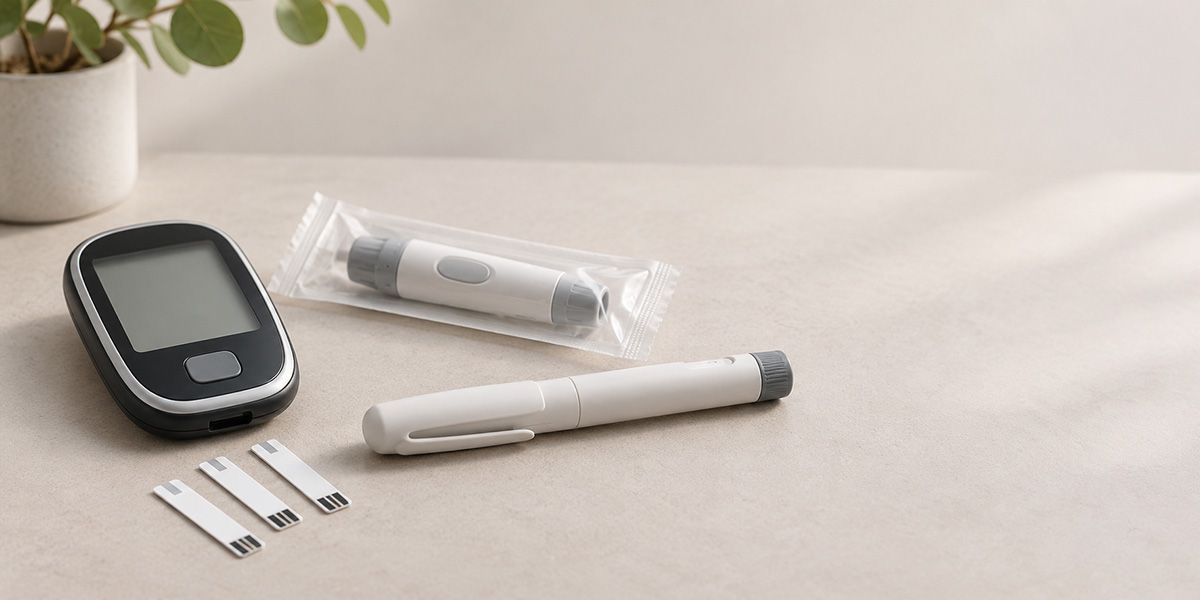
Managing diabetes at home depends on having the right supplies ready before you need them. This checklist covers the diabetes supplies most people use at home, what each one does, how Medicare handles coverage and how much to keep on hand.
Blood Glucose Monitoring Supplies
For most people with diabetes, a blood glucose meter is the center of daily care. The best meter is one you'll use consistently, with test strips that are easy to find and affordable over time, since strips are the supply you'll buy most often. Our guide on how to choose a home blood pressure monitor or glucose meter covers device features in more detail.
Along with the meter itself, a complete testing kit includes test strips matched to your meter model, such as EvenCare G2 glucose strips for the EvenCare G2 meter. It should also include control solution to check that your meter and strips are reading accurately, which is worth doing when you open a new vial of strips or if a result doesn't match how you feel. A diabetic logbook is useful even if your meter stores readings, since writing down meals, activity and medication alongside your numbers helps you and your doctor spot patterns.
Lancets and Lancing Devices
A lancing device holds the lancet and controls how deep it pricks, which makes testing more comfortable and consistent. An adjustable lancing device lets you set the depth to the lightest setting that still gives you a good blood sample.
Lancets are sized by gauge, and a higher number means a thinner needle. A 30G lancet is thinner than a 28G lancet and often feels gentler. Safety lancets, like the push button and side button styles, are single-use and retract after firing. That makes them a good choice for caregivers, since they reduce the risk of accidental needle sticks. Whichever type you use, use a fresh lancet each time, since a reused lancet dulls quickly.
Continuous Glucose Monitor Supplies
A continuous glucose monitor (CGM) uses a small sensor worn on the skin to track glucose levels around the clock. CGM users still need ongoing supplies, including replacement sensors, transmitters on systems that use them, and adhesive patches or overlays to keep sensors in place. Many CGM users also keep a traditional meter and strips as a backup, or to confirm a reading that seems off. If you're interested in a CGM, talk with your doctor about whether it's right for you, and contact our team about supply options.
Insulin Supplies
If you use insulin, your supply list grows to include syringes or pen needles, alcohol prep pads and a cooler or insulated case for traveling. Insulin pump users also need infusion sets and reservoirs. Keep at least one backup method for taking insulin, such as syringes if you normally use a pump, in case of a device problem.
Safe Sharps Disposal
In California, it's against state law to put used lancets, needles or syringes in the trash, recycling or green waste bins. Under SB 1305, in effect since September 1, 2008, home-generated sharps must go into an approved sharps container. Keep a 5-quart sharps container at home, and a compact 1-quart sharps container for travel or a second testing spot. Alameda County residents can drop off full containers for free at county Household Hazardous Waste facilities, and mail-back containers are another option.
Foot Care and Everyday Essentials
Diabetes can reduce feeling and circulation in the feet, so small cuts can go unnoticed and heal slowly. Padded, seamless diabetic socks and basic wound care supplies help you protect your feet and treat minor injuries right away. People with certain foot conditions may also qualify for therapeutic shoes and inserts through Medicare.
What Medicare Covers for Diabetes Supplies
Medicare Part B covers blood glucose meters, test strips, lancing devices, lancets and control solution for people with diabetes, whether or not they use insulin. Insulin users can receive up to 300 test strips and 300 lancets every three months. Non-insulin users can receive up to 100 of each every three months. Both groups can get one lancing device every six months. Higher quantities are possible when your doctor documents that they're medically necessary.
Part B also covers CGMs and their supplies for people who use insulin or have a history of problematic low blood sugar, and who had a doctor visit within six months of ordering. After the Part B deductible, you typically pay 20% of the Medicare-approved amount. Insulin, syringes and pen needles are usually covered through Part D drug plans instead. The exception is insulin used in a durable insulin pump, which Part B covers.
Your prescription needs to list your diagnosis, the type of meter, whether you use insulin and how often you test. Bay Area Medical Supply is certified by CMS to accept Medicare, and our team can help verify your benefits.
How Much to Keep on Hand
A good rule is to keep at least two weeks of test strips and lancets beyond what you expect to use, so a delayed order or extra testing during an illness doesn't leave you short. Since Medicare covers testing supplies in three-month amounts, many people find it easiest to reorder on that same schedule. Check expiration dates on test strips and control solution when restocking, since expired strips can give inaccurate readings. Browse our full selection of diabetes supplies, or contact us for help putting together your list.
Frequently Asked Questions
What supplies do I need for diabetes at home?
Most people need a blood glucose meter, compatible test strips, a lancing device, lancets, control solution and a sharps container. Insulin users also need syringes or pen needles, and CGM users need replacement sensors. Diabetic socks and basic wound care supplies help protect your feet.
Does Medicare cover diabetic supplies?Yes. Medicare Part B covers glucose meters, test strips, lancets, lancing devices, control solution and CGMs for eligible patients. You typically pay 20% of the approved amount after the Part B deductible. Insulin and syringes are usually covered under Part D.
How many test strips does Medicare cover?Medicare covers up to 300 test strips every three months for insulin users and up to 100 every three months for non-insulin users. Your doctor can document medical necessity if you need more.
Can I throw used lancets in the trash in California?No. California law prohibits putting home-generated sharps in trash or recycling bins. Use an approved sharps container and drop it off at a collection site or use a mail-back program.
Comments