
Stephen Zimmerman
Updated 6:17 PM CDT, Mon August 24, 2026
Published Under: General Helpful Tips Travel
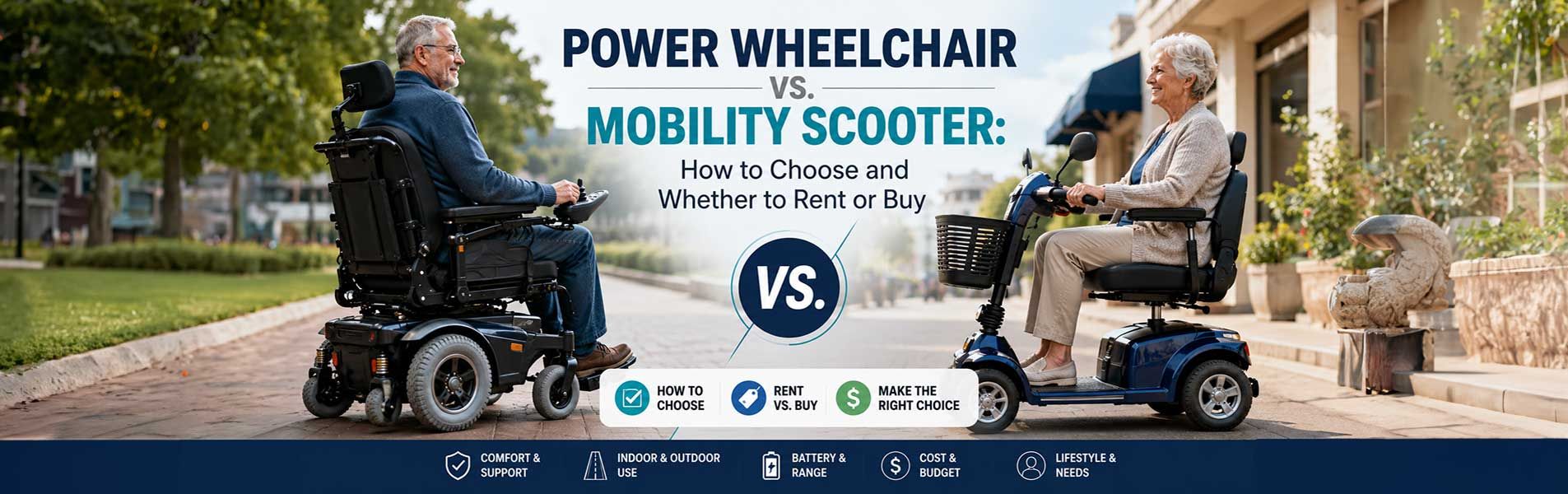
Power Wheelchair vs. Mobility Scooter
Choosing between a power wheelchair and a mobility scooter is one of the most common questions we hear at Bay Area Medical Supply. Both restore independence and make daily life easier, but they serve different needs, and choosing the wrong one can mean paying for features you don't use or ending up with equipment that doesn't fit your lifestyle. This guide breaks down the differences and helps you decide whether renting or buying makes more sense for your situation.
Power Wheelchair or Mobility Scooter: What Is the Difference?
Power wheelchairs are built for people who need full seated support throughout the day, often due to limited strength, balance, or mobility in the trunk and legs. They are controlled with a joystick, offer a tighter turning radius for indoor use, and can be customized with features like tilt, recline, and specialized seating. If you need to use the chair for most of your waking hours, indoors and outdoors, a power wheelchair is usually the better fit.
Mobility scooters are designed more for people who can walk short distances or stand and transfer independently, but need help covering longer distances, whether that is around a large home, at the grocery store, or on outdoor errands. Scooters are steered with handlebars rather than a joystick, and many fold or disassemble for easier transport in a car trunk. Our Feather lightweight power scooter is a popular choice for exactly this kind of on-the-go use.
Neither option is universally better. The right choice depends on how much seated support you need throughout the day, how far you need to travel, and whether portability matters for your routine.
Key Features to Consider
Weight capacity and seat size: Every model has a maximum weight capacity, and seat width matters just as much for comfort and safety. Check both numbers against your needs before choosing a model, not just the general category.
Portability: If you plan to travel with the equipment, whether to appointments, family visits, or trips, look at how easily the chair or scooter breaks down. Lightweight models like our Feather wheelchair are built specifically to be easier to lift and transport than standard power chairs.
Indoor vs. outdoor use: Power wheelchairs generally handle tight indoor spaces better because of their smaller turning radius. Scooters tend to perform better outdoors over longer distances but can be bulkier to maneuver inside a smaller home.
Battery range: If you are active throughout the day or plan to be away from a charging point for extended periods, battery range should be one of the first things you check. Running out of power away from home is one of the most common frustrations with the wrong equipment choice.
Comfort and support features: Options like tilt, recline, adjustable armrests, and specialized cushioning matter most for people who will be seated for many hours a day. If you will only use the equipment for short trips, these features may be less critical.
Should You Rent or Buy?
Renting usually makes sense if:
- You are recovering from surgery or an injury and need equipment temporarily
- You are not yet sure which type or model fits your needs long term
- You want to try a power wheelchair or scooter before committing to a purchase
- Your need is seasonal or occasional, such as for travel or events
Buying usually makes sense if:
- You will need the equipment for daily, long-term use
- You have a specific model in mind that fits your body and lifestyle
- You want to avoid ongoing rental costs that can exceed a purchase price over time
- You need custom seating or features not typically available with rental units
If you are unsure which category fits your situation, our team can walk through your daily routine and recommend whether renting first makes sense before committing to a purchase.
Getting Set Up
Once you choose between a power wheelchair and a scooter, proper fitting matters as much as the equipment itself. An improperly sized chair or scooter can cause discomfort, posture problems, or even safety issues over time. Our team measures for seat width, depth, and support needs in person, and can walk you through options like our ComfyGo electric wheelchair or the Go-Go Sport four-wheel scooter depending on what fits your needs.
Frequently Asked Questions
Will insurance cover a power wheelchair or scooter? Medicare and many private insurance plans cover power mobility equipment when it is medically necessary and prescribed by a doctor. Coverage details vary, so our team can help verify your specific benefits.
Can I rent a power wheelchair or scooter short term? Yes. Short-term rentals are available for recovery periods, travel, or situations where you are still deciding on the right long-term option.
How do I know which model fits my needs? The best way is an in-person consultation where our team can assess your daily routine, physical needs, and the environments you will be using the equipment in most often.
What is the difference in maintenance between the two? Power wheelchairs generally require more specialized maintenance due to their more complex seating and control systems, while scooters tend to be simpler mechanically. Both benefit from regular battery care and periodic checkups.
Ready to Find the Right Fit?
Whether you need a power wheelchair for daily seated support or a mobility scooter for easier mobility, choosing the right equipment starts with understanding your daily needs. Browse our full selection of power scooters and power wheelchairs, or contact us to talk through your options with someone who can help you choose with confidence.
Comments