
Stephen Zimmerman
Updated 3:08 PM CDT, Thu September 17, 2026
Published Under: General Helpful Tips
Bathroom Safety Equipment for Aging in Place
Getting older at home usually means adapting a few rooms, and bathrooms often need the most attention. Slick tile, low toilet seats, and tight turns around a tub or shower make this small room one of the most common places for a fall. The good news is that a handful of well-chosen products can turn a risky bathroom into a genuinely safe one, and none of them require a full remodel to install.
At Bay Area Medical Supply, families come to us regularly for guidance on this exact topic, often after a hospital stay, a recent fall, or simply a growing worry about a parent living alone. Two products come up more than any others: toilet safety rails and raised toilet seats. Both are simple, both install in minutes, and both make a real difference in daily independence. You can browse our full range of bathroom safety equipment anytime, but it helps to understand what each piece actually does before you buy.
Why the Bathroom Carries So Much Risk
Bathrooms combine several fall risk factors at once. Hard, often wet surfaces meet low seating and awkward transfer points, and unlike a living room or bedroom, there is rarely furniture nearby to grab for balance. According to recent CDC data, roughly one in four adults over 65 experiences a fall each year, and a large share of those happen during routine transfers, sitting down, standing up, or stepping in and out of a shower. Small changes to this one room can meaningfully lower that risk.
Toilet Safety Rails and Raised Seats Explained
A toilet safety rail mounts directly onto the existing toilet bowl and gives you sturdy arms to push against while sitting or standing. Most versions, including the Medline model we carry, adjust in height and fold up out of the way when not needed, which matters in a shared bathroom. Weight capacity is worth checking before you buy, since not every rail is built for the same body size, and a rail rated well below someone's weight defeats the purpose entirely.
A raised toilet seat solves a slightly different problem. Standard toilets sit lower than most chairs, and that extra distance makes standing up harder on the knees, hips, and lower back. Adding two or three inches of height can be enough to make the motion far easier and far safer, without changing anything else about the bathroom. Some people use a raised seat on its own, while others pair it with a rail for extra support on both sides.
Toilet Lifts for Additional Support
For someone who needs more help than a rail or raised seat can provide, a powered toilet lift is worth considering. Our toilet lift option gently raises and lowers a person using a motorized seat, similar in concept to a lift chair but built specifically for the bathroom. This tends to be the right choice for people managing more advanced mobility limitations, or for caregivers who can no longer safely assist with a manual transfer on their own.
Commodes and Shower Seating
Not every bathroom challenge happens at the toilet itself. A bedside commode gives someone a safe option overnight or during recovery, without a trip down a dark hallway. Our folding commode works well here since it collapses for storage and can double as a raised toilet seat when placed directly over the bowl. Showering brings its own risks too, since standing on a wet surface for several minutes is one of the more dangerous daily routines for someone with balance concerns. A sturdy shower chair with a backrest and padded arms removes that standing time almost entirely while still allowing a full, comfortable shower.
Grab Bars and Non-Slip Surfaces
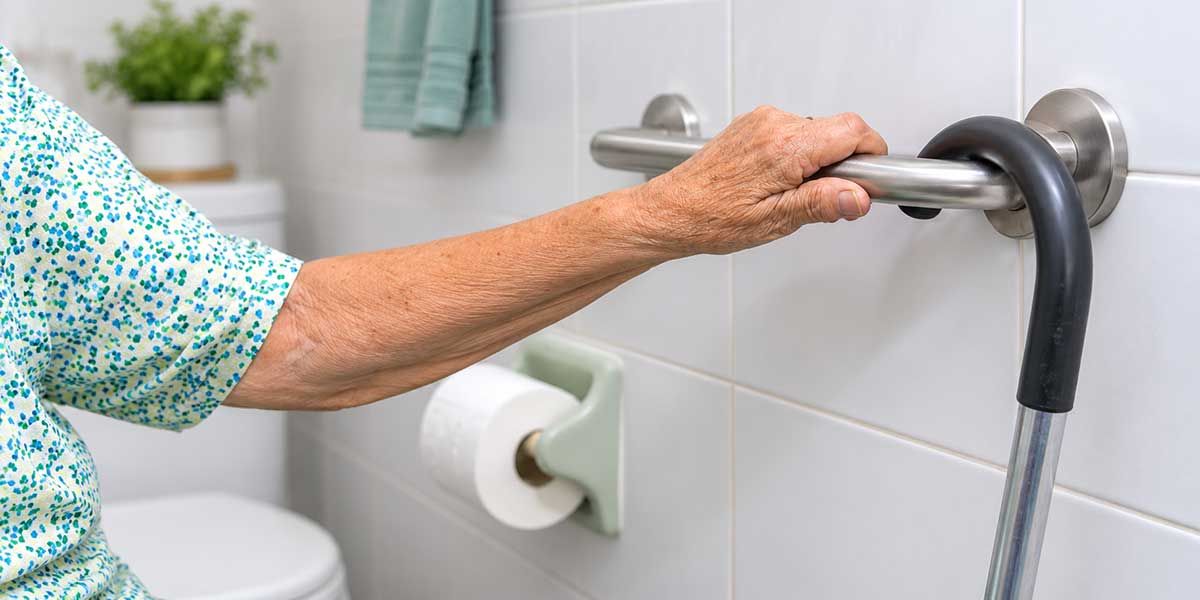
Rails and raised seats solve the toilet transfer, but the walk between the sink, the shower, and the door deserves attention too. A properly anchored grab bar near the tub or shower entrance gives someone a fixed point to hold onto during the split second when balance briefly shifts, and unlike a towel bar, it is rated to bear real weight. Pairing that with a non-slip mat or adhesive strips on the shower floor addresses the other half of the equation, since wet tile is often the actual trigger behind a fall rather than any single piece of missing equipment. Neither product costs much, and together they close a gap that rails and raised seats alone cannot.
Choosing the Right Combination
Most households end up needing more than one product, and that is completely normal. Someone recovering from hip surgery might use a raised seat and a shower chair together for a few months, while someone managing a progressive condition may eventually need a rail, a commode, and a transfer bench all at once. Rather than guessing, think through the specific movements that feel unsteady: sitting down, standing up, stepping over a tub wall, or simply staying upright for a few minutes at a time. Each movement points toward a different piece of equipment, and most people find they only need two or three items to cover the moments that matter most.
What Insurance Typically Covers
Medicare and many private insurance plans have fairly limited coverage in this category. Basic toilet safety rails and raised seats are often considered convenience items rather than durable medical equipment, so they are frequently paid for out of pocket. Commodes and certain toilet lifts have a better chance of coverage when a physician documents medical necessity, though this varies by plan. It is always worth checking directly rather than assuming, since coverage rules shift more often than people expect.
Getting Everything Set Up Properly
Installation matters just as much as the product itself. A rail mounted at the wrong height, or a raised seat that rocks slightly because it was not seated correctly, can create a new hazard rather than solving the old one. Our team can walk through sizing, weight capacity, and installation in person, whether you are outfitting a single bathroom or planning ahead for a longer-term care situation at home. If you are unsure where to start, reach out to our team and we can talk through exactly what your bathroom and your daily routine actually need.
Comments